Top Scientific Breakthrough Prediction Tools
Explore cutting-edge tools that leverage AI to predict scientific breakthroughs and drive innovation across various fields.
Top Scientific Breakthrough Prediction Tools
Predicting future scientific advancements is no longer guesswork. With the rise of AI and machine learning, tools now analyze patterns from research papers, patents, and datasets to identify emerging trends. These tools are used by researchers, investors, and organizations to stay ahead in fields like healthcare, biotechnology, and materials science. Here’s a quick look at the top tools:
- Innovation Lens: Analyzes millions of studies weekly to detect trends and emerging research directions.
- Scientifiq.ai: Links academic findings to industry applications and tracks unpublished research.
- SCIGEN: Uses neural networks to map trends across disciplines and predict future discoveries.
- Literature-Based Hypothesis Generation Models: Connects insights from vast research databases to propose new directions.
- Google AI Workflow (GraphCast): Focuses on weather and climate data using advanced neural networks.
- Gene Editing Prediction Tools: Tracks advancements in genetic research and therapeutic applications.
These tools provide actionable insights, helping stakeholders make informed decisions about research priorities, funding, and investments.
Quick Comparison
| Tool | Focus Area | Key Strengths | Users |
|---|---|---|---|
| Innovation Lens | Research trends | Weekly updates, API integration | Investors, researchers |
| Scientifiq.ai | Academia to industry | Unpublished research insights, collaboration | Universities, businesses |
| SCIGEN | Cross-disciplinary links | Neural networks, real-time monitoring | Institutions, businesses |
| Literature-Based Models | Research connections | Hypothesis generation, automated reviews | Researchers, healthcare |
| Google AI Workflow (GraphCast) | Climate and weather data | Fast, precise environmental trend analysis | Climate researchers |
| Gene Editing Tools | Genetic research | Tracks patents, clinical trials, and therapies | Pharma, biotech investors |
These tools are reshaping how science is analyzed and predicted, offering new ways to discover and act on future opportunities.
Can AI Predict the Commercial Value of the Next Scientific Breakthrough?
1. Innovation Lens
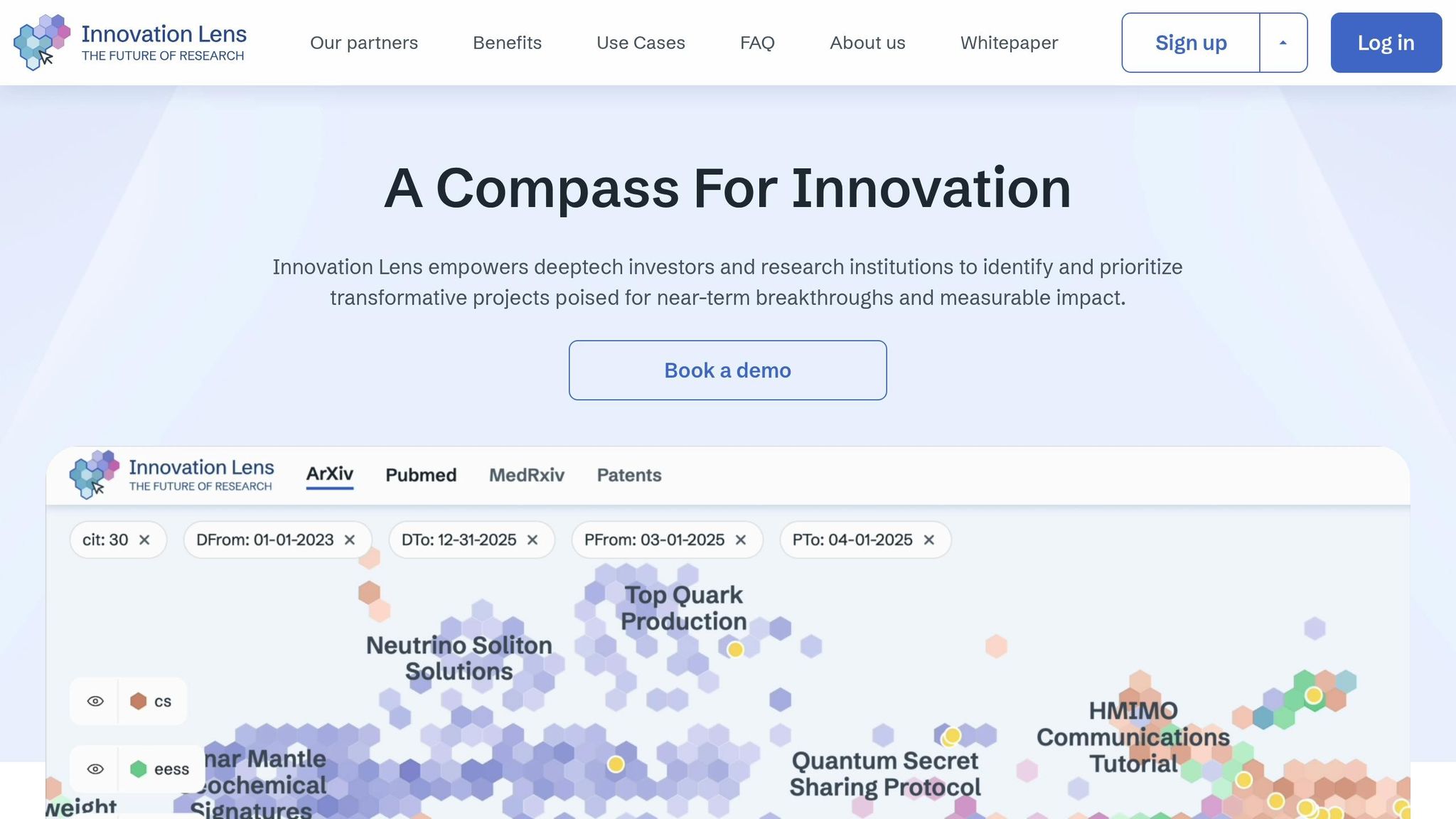
Innovation Lens is a platform designed to help deeptech investors, research institutions, and grantmakers identify groundbreaking scientific research early on. By combining cutting-edge AI analytics with carefully curated insights, it highlights transformative advancements across the scientific spectrum.
Predictive Methodology
Innovation Lens uses advanced predictive analytics to sift through millions of research studies every week. Its machine learning models, trained on repositories like PubMed and arXiv, detect patterns and trends that hint at future scientific breakthroughs. What sets it apart is its ability to identify subtle signals that distinguish groundbreaking research from routine academic work.
The platform evaluates research based on factors that often correlate with major impacts, such as interdisciplinary connections, novel methodologies, and emerging keyword trends. This forward-thinking approach allows it to forecast promising research directions years before traditional metrics, like citations, catch up.
Another standout feature is its ability to generate projected abstracts for new research. These summaries help users grasp potential research trajectories and pinpoint gaps in current scientific knowledge. This foresight empowers stakeholders to anticipate where significant discoveries might arise and position themselves accordingly.
Key Features
What makes Innovation Lens so powerful is its ability to process and synthesize insights from millions of studies on a weekly basis. Users receive continuous updates on emerging trends, with recommendations tailored to their specific interests and focus areas. This ensures that organizations get actionable intelligence relevant to their goals.
The platform’s API integration allows seamless incorporation into existing research management systems, making it easier for institutions to embed its predictive capabilities into their workflows. Additionally, curated reports spotlight transformative projects across various disciplines, with a focus on underexplored areas that hold high commercial potential.
Innovation Lens also excels in competitive intelligence. It helps users identify crowded research fields versus those still ripe for exploration. A robust validation system, backed by extensive datasets, ensures the reliability of its predictions, making it a versatile tool for a wide range of applications.
Applications
Research institutions use Innovation Lens to refine their funding strategies, directing resources toward early-stage research with high potential. University technology transfer offices benefit from the platform by monitoring internal discoveries for licensing opportunities, patents, and startup creation.
Deeptech investors rely on the platform to spot emerging technologies before they hit the mainstream. This gives them the edge to make strategic investments in research with significant commercial applications. Venture capital firms also use it to identify promising startups and research teams working on transformative technologies across various fields.
Government agencies and grantmakers turn to Innovation Lens to evaluate the economic potential of their research investments. By identifying high-impact projects, even at lesser-known institutions, the platform ensures that public funding supports initiatives with the greatest societal benefits.
Meanwhile, companies in innovation-driven industries use the tool to stay ahead of academic advancements. By identifying emerging research that could influence their competitive landscape, they can adapt their R&D strategies and form partnerships with researchers working on cutting-edge technologies. This early-warning system helps organizations navigate and capitalize on future opportunities effectively.
2. Scientifiq.ai
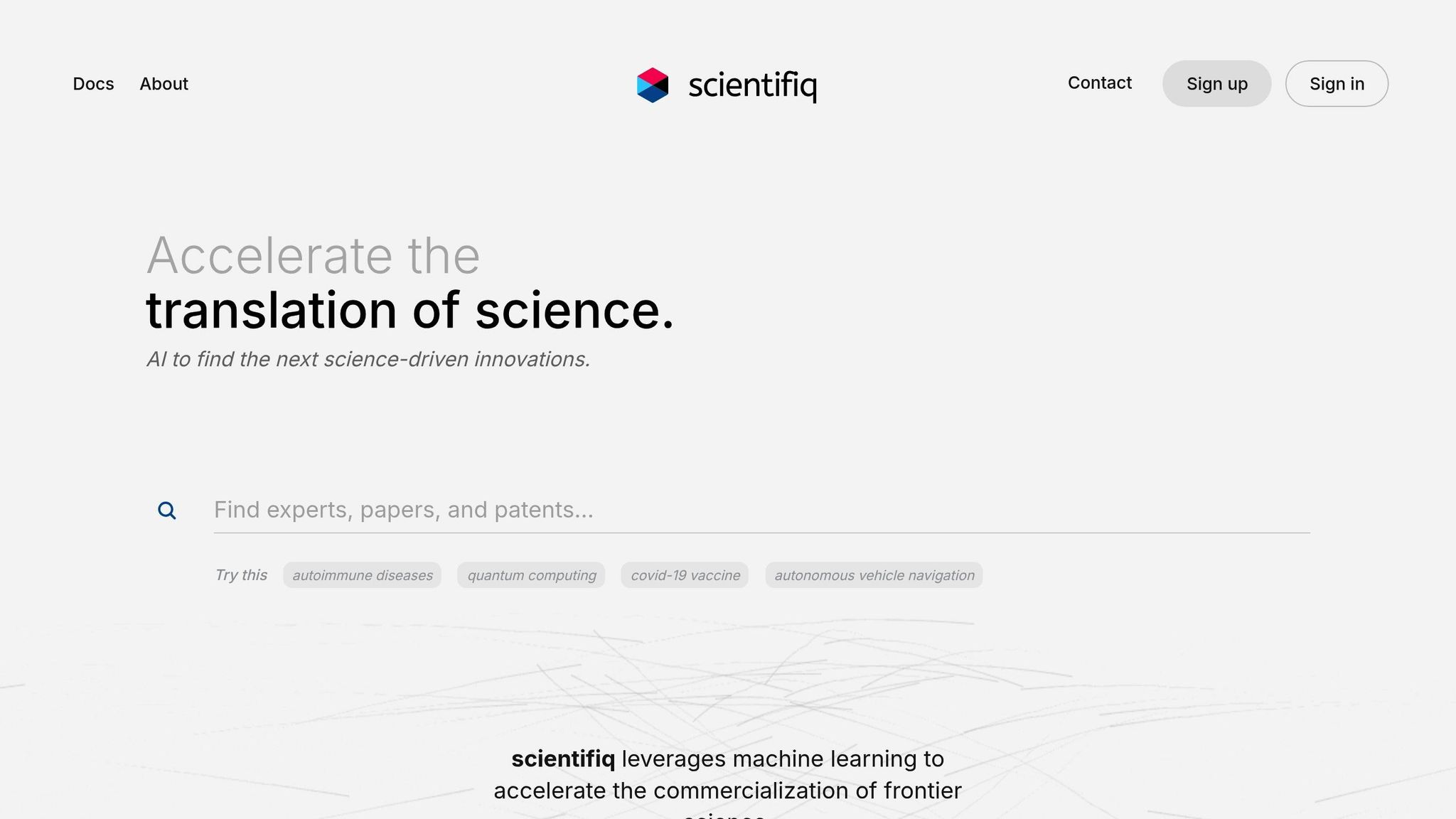
Scientifiq.ai is making waves by combining AI with scientific research to identify and accelerate the commercialization of groundbreaking discoveries. Backed by Duke University, The Kaufmann Foundation, and NCBiotech, this platform uses advanced AI tools to uncover emerging scientific breakthroughs and connect them with real-world applications.
Predictive Methodology
Scientifiq.ai employs custom AI models to sift through extensive datasets, including researcher profiles, publications, and patents. The goal? To spot leading scientists, technologies, and discoveries long before they hit the mainstream.
Its multi-layered impact prediction system evaluates discoveries across three key areas: commercial potential, scientific significance, and social influence. This gives users a well-rounded view of how a discovery could shape industries, science, and society.
Another standout feature is its ability to bridge the gap between academic research and industry needs. By linking specific scientific advancements with relevant technology sectors and companies, the platform helps users see how theoretical ideas can evolve into practical innovations.
Key Features
Scientifiq.ai pulls data from top-tier sources like OpenAlex API, Reliance On Science, Google Patents, and Grants.gov. This rich data pool enables the platform to generate tailored recommendations for specific topics and industries.
One of its standout features is offering real-time insights into both published and unpublished research. This gives users a head start in identifying emerging trends and staying ahead of the curve.
The platform also includes collaboration tools, allowing users to create and share custom watchlists with their teams and partners. This makes it easier for organizations to align their research strategies and keep everyone on the same page about upcoming developments.
Applications
Scientifiq.ai serves a diverse range of users:
- Universities, governments, and foundations use it to maximize the impact of their research investments. By identifying high-potential innovations and emerging fields, they can allocate funding more effectively to projects with the best chances of success.
- Businesses and investors rely on the platform to uncover academic innovations and tap into emerging talent. This is especially valuable for venture capital firms and corporate R&D teams looking to discover promising technologies early on.
- R&D labs integrate Scientifiq.ai into their workflows to stay ahead of cutting-edge research. The platform helps them build partnerships with top researchers and universities, ensuring they remain competitive and ready to explore new opportunities for growth and collaboration.
3. SCIGEN
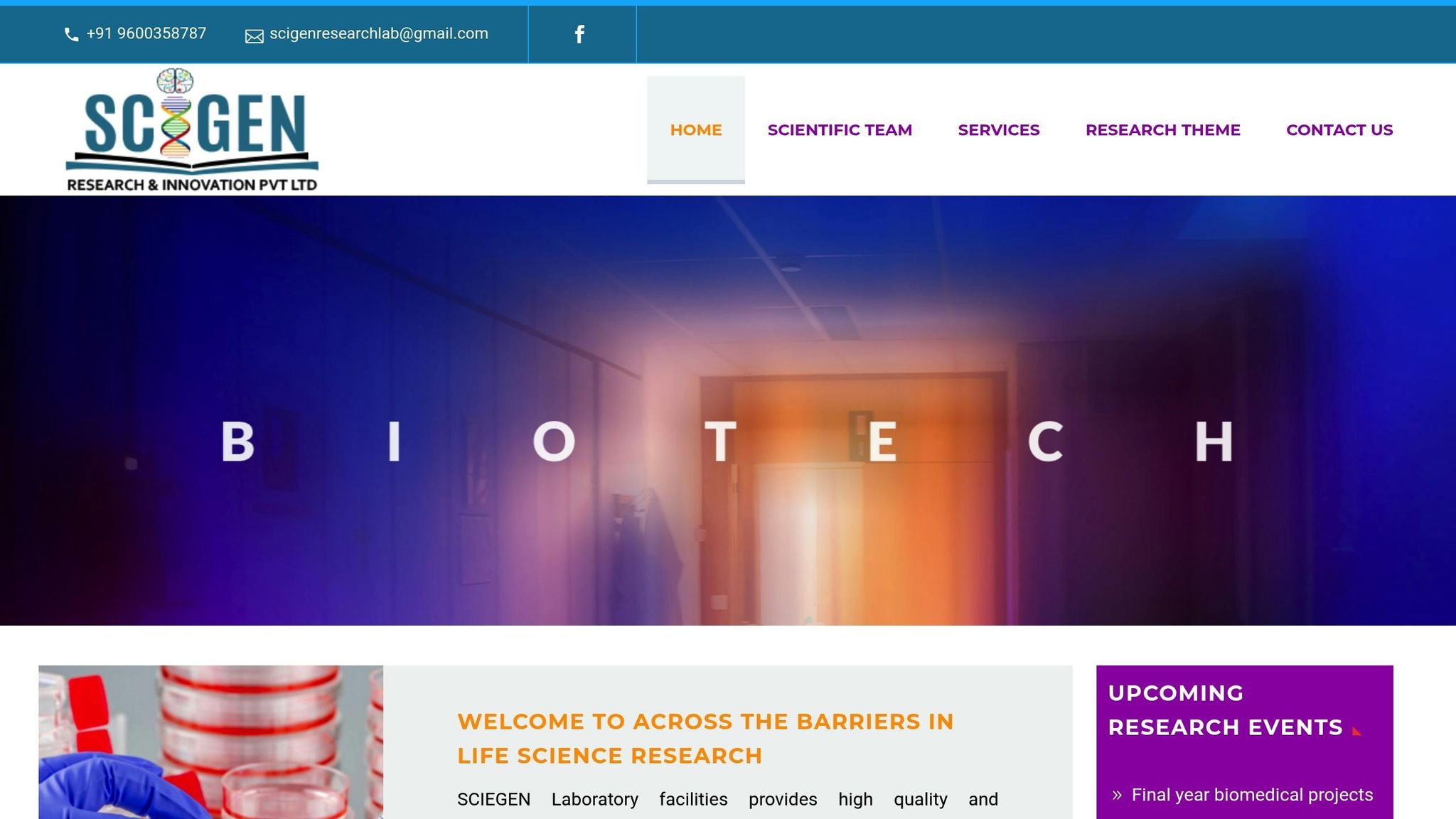
SCIGEN is an AI-driven platform designed to predict future advancements in science by analyzing patterns and trends. By combining machine learning and natural language processing, it examines data from research papers, patents, and grant information to pinpoint emerging trends that could lead to groundbreaking discoveries.
Key Features That Drive Predictions
SCIGEN's ability to make accurate forecasts comes from its advanced features:
- Multi-layered Neural Network: This system processes complex scientific data to detect hidden patterns that might otherwise go unnoticed.
- Semantic Mapping: By mapping relationships across various scientific fields, it uncovers links between seemingly unrelated disciplines.
- Temporal Trend Analysis: Tracks how scientific discoveries evolve over time and transition into practical applications.
- Cross-Disciplinary Integration & Real-Time Monitoring: Combines data from multiple fields and keeps up-to-date with new publications and funding announcements as they happen.
Practical Uses
SCIGEN’s capabilities make it a valuable tool for a range of sectors. Research institutions can use its insights to allocate resources more effectively and focus on high-potential projects. At the same time, businesses can rely on its forecasts to steer investments toward technologies with transformative potential.
4. Literature-Based Hypothesis Generation Model
Literature-Based Hypothesis Generation Models are transforming the way scientific discoveries are made by connecting the dots across vast collections of academic research. These AI-driven systems are particularly effective at spotting connections that might otherwise go unnoticed, making them powerful tools for advancing knowledge across a range of disciplines.
Predictive Methodology
These models rely on large language models (LLMs) and advanced AI algorithms to sift through extensive scientific literature. By mining databases, they extract valuable information and detect patterns that human researchers might overlook[3]. This ability allows them to identify emerging trends and opportunities faster than traditional methods. For example, they can link advancements in materials science to green technologies or connect molecular biology insights to drug development, offering a broader perspective on scientific possibilities.
Key Features
The practical applications of these models make them indispensable for research. One standout feature is automated literature reviews. Tools like Elicit, developed by Ought AI, streamline the process of synthesizing insights from academic papers, enabling researchers to refine their questions and hypotheses more effectively[2]. Additionally, these models support brainstorming by using AI-powered chatbots and interfaces to generate fresh ideas grounded in existing knowledge[3].
Applications
The versatility of these models has made them valuable across multiple scientific fields. In drug discovery, they play a crucial role in identifying therapeutic compounds and targets, aiding in both drug repurposing and computer-aided drug design[2][1]. In healthcare, AI-driven hypothesis generation has led to advancements in diagnosis, treatment, and prevention by uncovering new insights from research data[3]. Materials science benefits from these models as well, particularly in the search for innovative materials that could support next-generation green technologies[3]. In the life sciences, researchers use these tools to explore new directions and pinpoint areas with the potential for groundbreaking discoveries[3].
sbb-itb-5766a5d
5. Google AI Workflow for Scientific Software
Google has taken a big step forward in improving how we analyze large-scale environmental data. By incorporating DeepMind's GraphCast, a cutting-edge deep-learning platform, the company's AI workflow for scientific software delivers highly accurate predictions [2].
Predictive Methodology
GraphCast uses neural networks trained with decades of weather and climate data to uncover complex patterns in environmental datasets. By analyzing a wide range of variables, the system can identify subtle relationships and provide highly precise predictions for critical environmental trends.
Key Features
GraphCast stands out for its ability to process global environmental data at lightning speed, offering predictions in just minutes. Its high-accuracy modeling and real-time analytics make it a powerful tool for researchers who need fast, reliable insights.
Applications
This advanced platform has already shown its value in real-world scenarios. It's being used for tasks like environmental modeling, weather pattern forecasting, and climate change studies [2]. By integrating data-driven insights, GraphCast helps researchers and institutions improve their understanding of climate science and atmospheric behavior, paving the way for more informed scientific research.
6. AI-Powered Network Optimization (ESnet)

ESnet, short for the Energy Sciences Network, is a high-performance research network managed by the U.S. Department of Energy. It serves as a critical backbone, connecting national laboratories, universities, and research facilities across the country. This infrastructure plays a key role in enabling the massive data transfers required for numerous scientific endeavors.
While some have speculated about the potential for AI-driven network optimization to predict scientific milestones, there’s no verified evidence that ESnet employs AI in this way. Instead, its primary focus is on delivering reliable, high-speed connectivity to support data-heavy research across various fields.
This distinction highlights ESnet's role as a facilitator of scientific progress, ensuring seamless data sharing and collaboration, rather than functioning as a tool for forecasting advancements. It stands apart from other platforms by emphasizing connectivity over predictive capabilities.
7. Gene Editing Prediction Tools
Gene editing prediction tools are designed to forecast advancements in genetic modification, therapeutic applications, and biotechnology. By analyzing data from genomic studies, clinical trials, and regulatory processes, these tools help identify trends shaping the future of genetic engineering.
How They Work
These tools rely on machine learning to sift through diverse data sources. They examine patent filings from biotech companies, clinical trial records, research publications, and regulatory timelines to predict potential advancements. Using natural language processing, they extract insights from scientific papers, while statistical models track the progress of genetic therapies from early research to potential market approval.
Key areas of focus include CRISPR, base editing, and prime editing. By analyzing research from top institutions, they highlight emerging innovations. Funding patterns from venture capital firms and government agencies are also evaluated, pinpointing which genetic targets and therapeutic approaches are attracting the most investment. Historical data from regulatory bodies like the FDA is incorporated to estimate when specific gene therapies might gain approval.
Features to Know
Gene editing prediction tools excel in two main areas: identifying genetic targets and forecasting therapy timelines. They maintain extensive databases that track which diseases and conditions are the focus of promising research. By analyzing preclinical data and early trial outcomes, they assign probability scores for therapeutic success.
Competitive intelligence tools provide insights into the activities of major biotech players like Editas Medicine, Intellia Therapeutics, and CRISPR Therapeutics. These features track patent landscapes, flagging potential intellectual property conflicts and uncovering opportunities for innovation in less-explored areas of genetic research.
Real-time alerts keep users updated on critical developments, such as groundbreaking publications, trial results, and regulatory decisions - events that could significantly influence the direction of gene editing research.
Who Uses These Tools?
Pharmaceutical companies use gene editing prediction tools to guide their investments, helping them identify promising therapeutic targets before the market becomes crowded. Venture capital firms leverage these platforms to evaluate biotech startups and gauge the commercial potential of therapies under development.
Academic institutions benefit by spotting research collaborations and emerging areas that align with their expertise. These tools help researchers prioritize genetic targets with the highest likelihood of success, ensuring their efforts are strategically focused.
Regulatory agencies and policymakers also rely on these tools. By anticipating future challenges in overseeing genetic therapies, they can develop regulatory frameworks that are ready for new technologies before they reach clinical stages. These platforms fill a critical gap by addressing the unique complexities of genetic research and its applications.
Conclusion
The way we predict scientific advancements has taken a massive leap forward thanks to these ten cutting-edge tools. Each one brings something unique to the table, whether it’s AI-driven analysis of research papers, quantum computing forecasts, or gene editing predictions. Together, they’re reshaping how breakthroughs are identified and acted upon.
These tools comb through millions of studies, uncovering trends and connections that would be impossible for humans to spot. Some platforms deliver regular updates from extensive scientific databases, while others focus on niche areas like quantum computing or biotechnology. This mix of wide-ranging insights and specialized focus ensures no potential breakthrough is overlooked.
Their impact isn’t limited to academic circles. Deeptech investors now use these tools to spot promising startups before they hit the mainstream. Grant-making organizations can direct resources to research areas with untapped potential. Meanwhile, pharmaceutical companies are accelerating drug development by leveraging gene editing prediction tools to streamline discovery processes.
These tools don’t just improve decision-making; they’re changing the game entirely. Advanced forecasting capabilities, which once required entire teams and months of work, are now accessible through APIs and customizable dashboards. This accessibility is leveling the playing field, enabling more organizations to engage in strategic, data-driven innovation.
The future of progress hinges on predicting the next big breakthroughs. With these tools, organizations have the analytical power to make smarter, faster investments that could drive transformative change.
FAQs
How can prediction tools for scientific breakthroughs help investors and research institutions?
Prediction tools for scientific advancements are transforming how investors and research institutions approach funding and resource allocation. By using technologies like AI and data analytics, these tools highlight emerging trends and pinpoint promising innovations in the scientific world.
For investors, this means identifying opportunities with strong market potential before they gain widespread attention. For research institutions, these tools offer valuable insights into projects likely to make the biggest impact, helping to refine research priorities and explore practical applications for their findings. Additionally, they facilitate connections with experts and collaborators, fostering progress and new ideas in the process.
How does machine learning enhance the accuracy of scientific breakthrough prediction tools?
Machine learning significantly enhances the precision and speed of tools designed to predict scientific advancements. By sifting through massive datasets, it uncovers patterns, trends, and connections that traditional approaches might overlook.
These tools leverage machine learning to formulate hypotheses, predict potential outcomes, and spotlight new areas of discovery. This empowers researchers and decision-makers to base their strategies on data, improving funding allocation and innovation planning.
How do tools predict breakthroughs in gene editing and genetic therapies?
Gene editing prediction tools leverage cutting-edge technologies like AI, machine learning, and data analytics to sift through massive amounts of scientific data. By analyzing research papers, clinical trial results, and genetic datasets, these tools uncover patterns and spot emerging trends in the field.
They work by mapping the connections between genetic mechanisms and therapeutic outcomes, allowing them to predict which areas of gene editing hold the most promise for advancement. This insight helps researchers, investors, and decision-makers focus their resources on developing genetic therapies that could deliver the greatest impact.