Predictive Analytics vs Traditional Research Methods
Explore the differences and applications of predictive analytics and traditional research methods to enhance your research strategy.
Predictive Analytics vs Traditional Research Methods
Predictive analytics and traditional research methods serve different purposes in research, each with distinct strengths. Predictive analytics uses machine learning and big data to find patterns and forecast outcomes, while traditional methods rely on hypothesis-driven experiments to establish causation. Choosing between these approaches - or combining them - depends on your goals, resources, and the type of insights you need.
Key Takeaways:
- Predictive Analytics: Best for large datasets, quick insights, and identifying trends. It focuses on correlations and forecasts but requires high-quality data and technical expertise.
- Traditional Research: Ideal for proving causation and validating findings through controlled experiments. It’s slower but ensures accuracy and reliability.
Quick Comparison:
| Aspect | Predictive Analytics | Traditional Research Methods |
|---|---|---|
| Speed | Hours to days | Months to years |
| Data | Large, diverse datasets | Smaller, curated samples |
| Validation | Correlation-focused | Causation-focused |
| Cost | High upfront, decreases over time | Steady throughout |
| Scalability | High | Limited |
| Human Role | Data science expertise | Domain-specific expertise |
| Result Type | Probabilistic forecasts | Proven theories |
Combining these methods can maximize both speed and precision, offering a balanced approach for tackling complex research challenges.
How Each Method Works
What is Predictive Analytics?
Predictive analytics begins with data - lots of it. Instead of starting with a specific hypothesis, it dives into datasets to uncover hidden patterns and relationships. By using machine learning models like neural networks, decision trees, and regression models, these systems continuously learn and adapt as new data comes in, automatically refining their predictions.
One of the standout features of predictive analytics is its ability to handle unstructured data. Unlike traditional methods that often require clean and organized datasets, predictive models can process diverse inputs such as social media posts, sensor readings, and financial transactions. They excel at finding meaningful insights in what might otherwise seem like disorganized or chaotic information.
Another key advantage is real-time processing. Predictive systems can analyze streaming data as it arrives, making instant adjustments to predictions. This capability is especially valuable in areas like fraud detection, where quick decisions are essential.
Next, let’s explore how traditional research methods take a more structured and hypothesis-driven approach, offering a contrast to predictive analytics' data-first model.
What are Traditional Research Methods?
Traditional research follows a structured, methodical approach. Researchers begin by identifying a specific question or theory based on prior knowledge. From there, they design controlled experiments to test their hypotheses.
This process starts with a deep dive into existing research to identify gaps in understanding. Once a hypothesis is formed, scientists create controlled environments to isolate variables, ensuring precise measurement and analysis.
Peer review is a cornerstone of traditional research. Before findings are accepted, they undergo rigorous scrutiny by experts in the field. While this validation process ensures accuracy and reliability, it also significantly extends the time it takes to move from discovery to application.
Traditional methods rely heavily on statistical significance testing. Researchers use established techniques to determine whether their results are meaningful or simply the result of chance. This focus on statistical rigor requires carefully designed experiments and substantial sample sizes.
When it comes to data collection, traditional research is highly targeted. Researchers focus on specific metrics directly related to their hypothesis, rather than analyzing large, unsorted datasets. While this approach provides deep insights into particular relationships, it can overlook unexpected connections.
Main Differences Between the Two
Now that we’ve detailed each approach, let’s break down their key differences in how they’re applied and the outcomes they produce.
Traditional research begins with a hypothesis and tests it through structured experiments, while predictive analytics starts with data and uncovers unexpected patterns. Traditional methods rely on smaller, curated datasets and controlled validation, whereas predictive analytics leverages massive datasets to generate fast, scalable insights.
Speed and scalability are major distinctions. Traditional research can take months or even years due to the time-intensive nature of controlled experiments and peer review. Predictive analytics, on the other hand, can deliver insights in hours or days, making it a better fit for industries where speed is critical.
The way validation is approached also sets these methods apart. Traditional research focuses on proving causation through controlled experiments, while predictive analytics emphasizes finding correlations and making accurate forecasts.
The role of humans differs, too. Traditional research leans heavily on human expertise for designing experiments and interpreting results. Predictive analytics automates much of the analysis, but human input remains essential for framing the right questions and understanding the broader implications.
Finally, costs vary between the two. Traditional research often requires significant upfront investment in equipment, facilities, and personnel, with expenses remaining steady throughout the project. Predictive analytics, while initially expensive due to technology and data infrastructure needs, becomes more cost-efficient as the system processes more data over time.
These differences highlight why each approach is better suited to specific goals and challenges, offering unique strengths depending on the context.
What is Predictive Analytics? | Data Analytics | Community Webinar
Pros and Cons of Each Method
Building on the earlier discussion about how these methods operate, let's dive into the practical considerations that influence their use in research strategies.
Side-by-Side Comparison
By weighing the strengths and weaknesses of each method, researchers can make better decisions about which approach aligns with their goals and resources.
| Aspect | Predictive Analytics | Traditional Research Methods |
|---|---|---|
| Speed to Insights | Hours to days | Months to years |
| Data Requirements | Large, diverse datasets | Smaller, curated samples |
| Cost Structure | High upfront, decreasing over time | Steady throughout project lifecycle |
| Scalability | Highly scalable across projects | Limited by manual processes |
| Validation Method | Statistical correlation and pattern recognition | Controlled experiments and peer review |
| Human Expertise Needed | Data science and machine learning skills | Domain-specific research expertise |
| Adaptability | Continuous learning and adjustment | Fixed methodology per study |
| Result Type | Probabilistic forecasts and trends | Causal relationships and proven theories |
Predictive analytics shines when speed and scalability are priorities, especially for analyzing large datasets. On the other hand, traditional methods excel at producing rigorously validated findings but often lack the flexibility and speed required in dynamic research environments.
The following sections delve deeper into the limitations of each method, offering insight into why certain approaches may - or may not - be the right fit for different research scenarios.
Where Traditional Methods Fall Short
Traditional research methods often face challenges with time and resources. The process involves multiple steps, such as forming hypotheses, designing experiments, and undergoing peer review. These steps can stretch timelines significantly, making it difficult to respond quickly to emerging questions or adapt to unexpected findings.
Resource demands are another hurdle. Conducting traditional research often requires specialized equipment, dedicated lab space, and highly trained personnel. These costs remain consistent, regardless of the project's scale, which can make handling multiple studies simultaneously prohibitively expensive.
Complex, multi-variable problems also highlight the limitations of traditional methods. While these approaches are excellent for isolating specific cause-and-effect relationships, they struggle with systems where many factors interact in unpredictable ways. This issue is particularly evident in areas like climate science, economics, and social behavior research.
Where Predictive Analytics Falls Short
Predictive analytics, while powerful, comes with its own set of challenges. The quality of its predictions heavily depends on the quality of the data. Flawed, incomplete, or biased datasets can lead to unreliable results, even with the most advanced algorithms. Unlike traditional methods, which can control for specific variables, predictive systems often risk perpetuating biases found in historical data.
The technical complexity of predictive analytics can also be a barrier. Smaller organizations may find the required infrastructure - such as high-performance computing, data storage systems, and skilled personnel - too costly to implement.
Another drawback is the "black box" nature of many machine learning models. These algorithms often operate without clear, interpretable logic, making it difficult to explain or justify their findings. This lack of transparency can be a significant issue when research results need to be replicated or defended.
Overfitting is another concern. Models may perform well on historical data but fail when applied to new or changing conditions. This is especially problematic in research areas where variables evolve over time or where scenarios differ from the original dataset.
Finally, predictive analytics requires ongoing maintenance. As new data becomes available or conditions shift, models need to be retrained and validated, adding operational overhead to the research process.
Understanding these limitations helps researchers choose the most suitable method for their specific needs and objectives, ensuring that their approach aligns with the demands of the project.
sbb-itb-5766a5d
Examples and Case Studies
Taking a closer look at how these methods work in practice, the following case studies highlight the strengths of predictive analytics and traditional research. These real-world examples demonstrate how each approach contributes to generating valuable insights.
Predictive Analytics Success Stories
Netflix offers a well-known example of the power of predictive analytics. By analyzing viewer behavior and engagement patterns, the company identified a demand for original programming, leading to the creation of House of Cards. This decision was rooted in data-driven insights, showcasing how predictive models can shape content strategies.
In the pharmaceutical industry, machine learning has transformed how companies identify potential treatments for viral outbreaks. By rapidly analyzing vast datasets, these models have significantly shortened the initial phases of drug discovery compared to traditional methods.
Energy companies are also benefiting from predictive analytics. By processing large volumes of weather data, predictive models help optimize grid management and incorporate renewable energy sources like wind power, aiding in the shift toward more sustainable energy solutions.
Traditional Research Method Success Stories
The development of CRISPR-Cas9 gene editing technology highlights the enduring importance of traditional research. Through carefully structured experiments and rigorous peer review, scientists developed a revolutionary tool that has reshaped genetic engineering and earned widespread recognition in the scientific community.
Traditional clinical trials remain the cornerstone of medical advancements. A prime example is the development of mRNA COVID-19 vaccines. These vaccines followed established protocols with multiple trial phases, ensuring robust safety and efficacy data. This rigorous process helped build public trust and facilitated regulatory approval.
The Hubble Space Telescope is another testament to traditional research methods. Its systematic observations have led to groundbreaking discoveries in astronomy, underscoring the value of meticulous, long-term investigation.
Comparing Results from Both Methods
When comparing outcomes, the strengths of each approach become clear. In drug discovery, predictive analytics can rapidly narrow down potential compounds, while traditional lab testing ensures their safety and effectiveness. In finance, traditional models provide a solid foundation for understanding markets, while predictive analytics enables real-time decision-making. Climate science benefits from both observational studies, which deepen our understanding of natural systems, and predictive models, which help forecast future conditions.
More and more organizations are finding success by combining these approaches. Predictive analytics offers speed and actionable insights, while traditional research provides the validation and depth needed for long-term trust and reliability. Together, they create a powerful toolkit for tackling complex challenges.
How to Choose the Right Method
After understanding the strengths and limitations of different approaches, the next step is figuring out how to align your method with your organization’s goals and abilities. Deciding between predictive analytics and traditional research methods depends on your objectives, the resources you have, and the specific questions you’re trying to answer.
Using Both Methods Together
Many organizations find value in combining predictive analytics with traditional research methods. This pairing allows them to take advantage of both speed and precision.
For instance, in the pharmaceutical industry, machine learning can quickly screen potential compounds, while traditional clinical trials ensure the safety and effectiveness of those compounds. Together, these methods blend the vast reach of big data with the nuanced insights of qualitative research.
Timing is critical when integrating these approaches. Predictive analytics works best during the early stages of research, helping to spot patterns and identify opportunities. Traditional methods, on the other hand, are ideal for confirming findings and establishing causal links. Once you define this hybrid strategy, it’s important to evaluate whether your organization is prepared to implement it effectively.
What Your Organization Needs to Consider
Before diving into predictive analytics, take a moment to assess whether your organization is ready. Key factors to evaluate include:
- The quality and maturity of your data
- Infrastructure for computing and secure data storage
- Access to personnel skilled in both domain expertise and data science
- Budget for ongoing expenses like software licenses, cloud services, and training
- Compliance with regulatory requirements and timelines
The urgency of your research also plays a role. Predictive analytics excels at delivering fast insights for short-term projects, while traditional methods are better suited for building a reliable foundation for long-term strategies.
Using Innovation Lens for Better Research
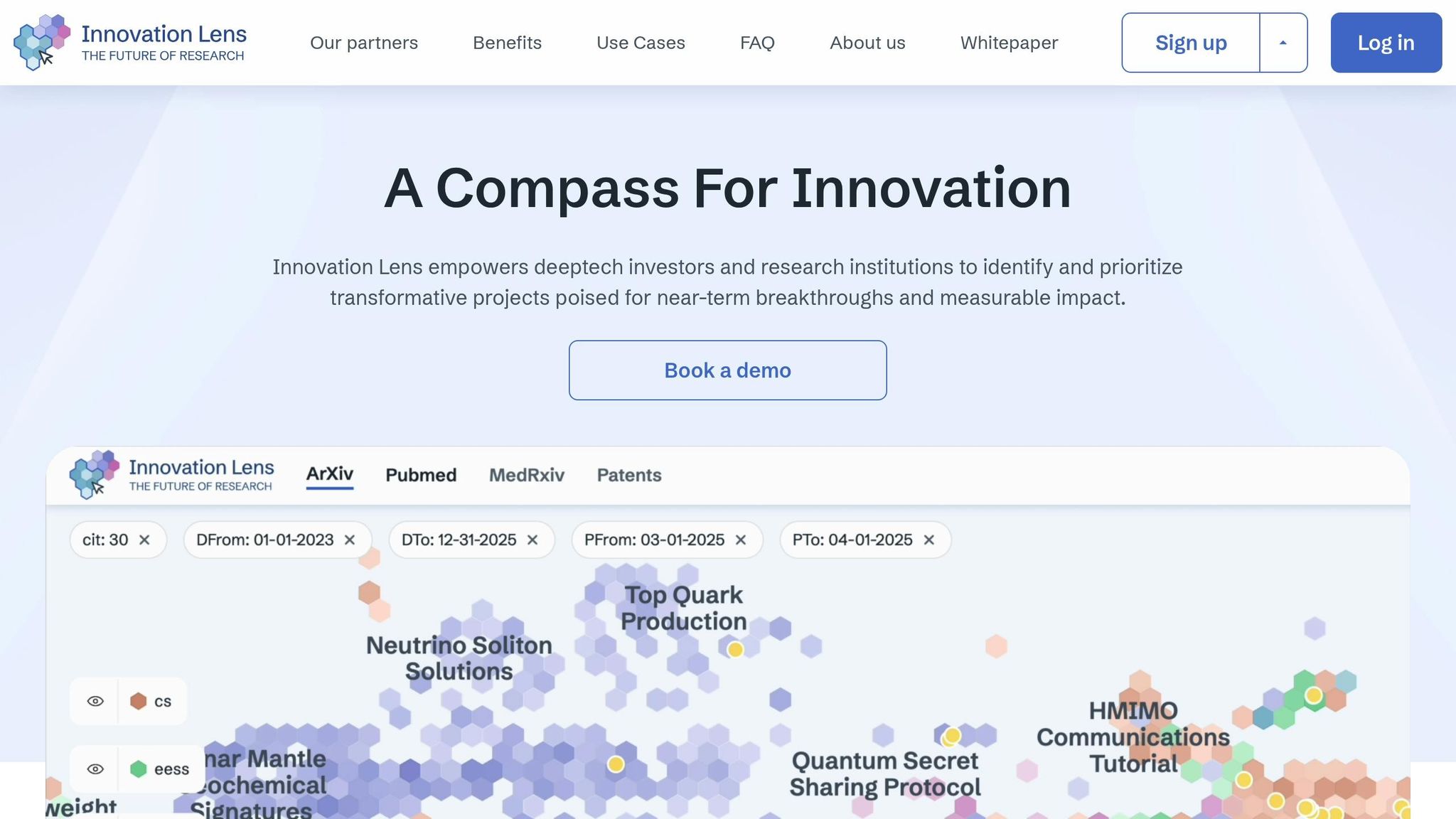
If your organization is ready, tools like Innovation Lens can simplify the integration of predictive analytics into your research process. This platform helps prioritize high-potential projects and streamlines data analysis with algorithm-driven insights and tailored recommendations.
For data validation, Innovation Lens uses trusted sources like PubMed and arXiv, ensuring that its predictive insights are backed by reliable information. Additionally, its API access allows these insights to fit seamlessly into your existing workflows.
Weekly updates from the platform keep you informed about changes in fast-moving fields like artificial intelligence, biotechnology, and renewable energy. By combining predictive analytics with traditional research methods, Innovation Lens helps organizations focus their resources on the most promising opportunities while staying ahead in competitive landscapes.
Key Takeaways
The choice between predictive analytics and traditional research methods depends on the specific needs and timing of your research. Each approach has its own strengths that make it invaluable in different scenarios.
Predictive analytics excels at processing large datasets quickly, making it perfect for the early stages of research, spotting trends, and allocating resources efficiently. That said, it requires high-quality data, robust infrastructure, and skilled professionals to implement and maintain effectively.
Traditional research methods, on the other hand, provide in-depth insights into why relationships exist. These methods are critical for tasks like validation, meeting regulatory requirements, and establishing a solid foundation of knowledge that can withstand close scrutiny. Combining these strengths can lead to optimal research outcomes.
Organizations that successfully integrate both approaches gain the advantage of fast, data-driven insights paired with the reliability of well-established research practices. Predictive analytics can offer rapid initial insights, while traditional methods ensure thorough validation and deeper understanding.
Before adopting new technologies, assess your organization’s readiness. This means evaluating the quality of your data, the state of your technical infrastructure, your budget, and the expertise of your team. These factors are crucial for a smooth transition and effective implementation.
For emerging fields that demand both speed and reliability, blending these methods is key to balancing innovation with risk management. Mastering when and how to use predictive analytics alongside traditional research methods will position organizations to innovate effectively while minimizing risks.
FAQs
How can organizations combine predictive analytics with traditional research methods to improve research outcomes?
Organizations can enhance their research efforts by blending predictive analytics with traditional research techniques. Predictive analytics, powered by tools like machine learning models, excels at forecasting future trends and uncovering patterns. Meanwhile, traditional methods offer valuable insights into historical data and the root causes behind trends.
When these approaches work together, they empower organizations to make smarter decisions, cross-check predictions with real-world evidence, and tackle both immediate and long-term objectives. This combination creates a well-rounded strategy, ensuring research is both forward-thinking and firmly rooted in established practices.
What should organizations evaluate before adopting predictive analytics in their research strategy?
Before diving into predictive analytics, it's essential to take a step back and evaluate a few key areas to set yourself up for success. First, think about your data maturity - do you have enough high-quality data to build reliable predictive models? Without a solid data foundation, even the best tools won’t deliver meaningful results.
Next, examine the complexity of your use case. Does predictive analytics fit well with your goals? Some research objectives may require simpler approaches, so it’s important to align the method with what you want to achieve.
Don’t overlook the resources needed to make this work. This means considering the technical skills of your team, the tools you’ll need, and your budget. Predictive analytics can be resource-intensive, so planning ahead is crucial.
Lastly, ensure that predictive analytics ties directly to your business objectives. The insights generated should be actionable and tailored to your organization’s specific needs. By addressing these factors thoughtfully, you’ll be in a much better position to unlock the full potential of predictive analytics in your research.
When should you use predictive analytics instead of traditional research methods, and vice versa?
Predictive analytics shines when you're working with large, complex datasets and need to forecast future trends or outcomes. By tapping into tools like machine learning algorithms and data-driven models, it can reveal patterns and generate predictions that would be tough - or nearly impossible - to uncover using traditional methods.
In contrast, traditional research methods are better for digging into specific hypotheses, analyzing historical trends, or conducting qualitative studies. These approaches are ideal for smaller datasets, controlled experiments, or when the goal is to gain a deeper understanding of causal relationships.
The choice between these two approaches boils down to your objectives: turn to predictive analytics for forward-looking insights, and rely on traditional methods for detailed, hypothesis-driven exploration.